
ARMENIA
GUGLIEMO MARIANI
ROBIN FOA’
MATTIOLI 1885
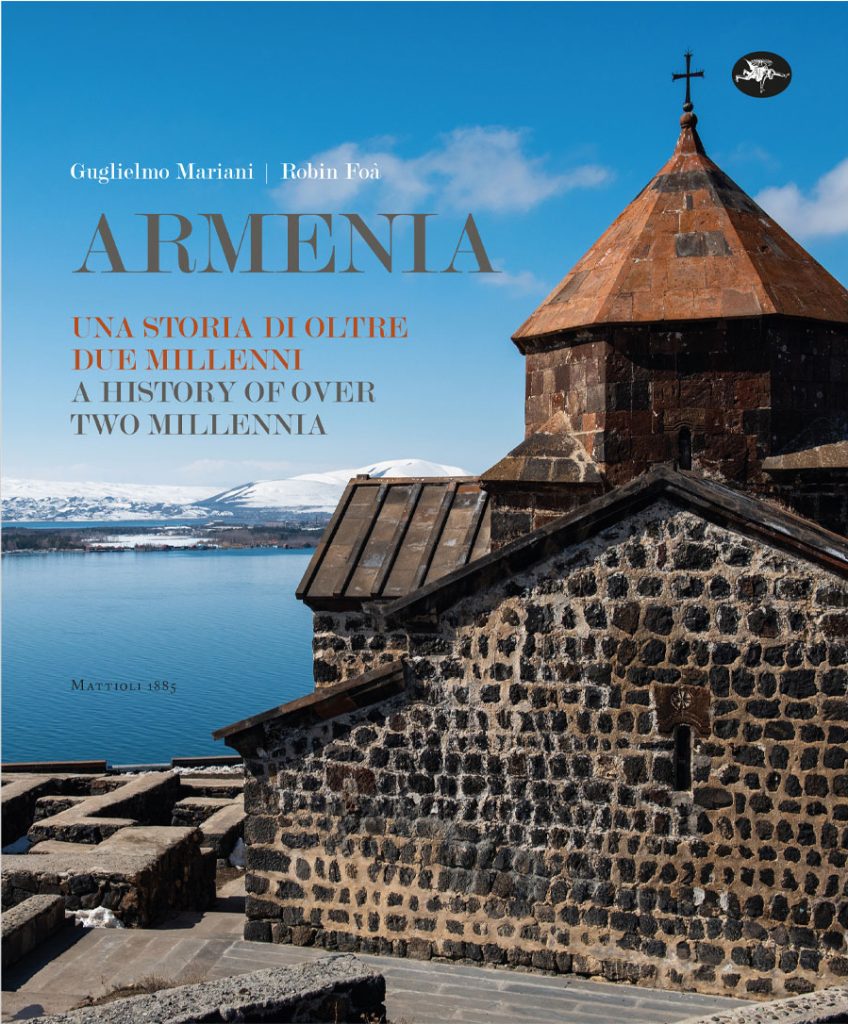
Un libro unico e affascinante, che narra le vicende di un popolo e della sua identità attraverso due millenni.
Un viaggio - ricco di immagini - in un territorio spesso dimenticato, alla ricerca delle radici di una cultura e delle tracce della sua drammatica e favolosa storia.
A unique and captivating book that narrates the events of a population and its identity through two millennia of history.
A journey - full of images - in an often forgotten territory, in search of the roots of a culture and the traces of its dramatic and extraordinary history.
IL VOLUME
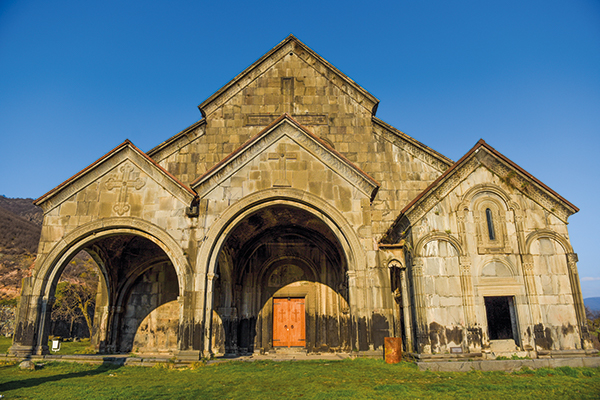
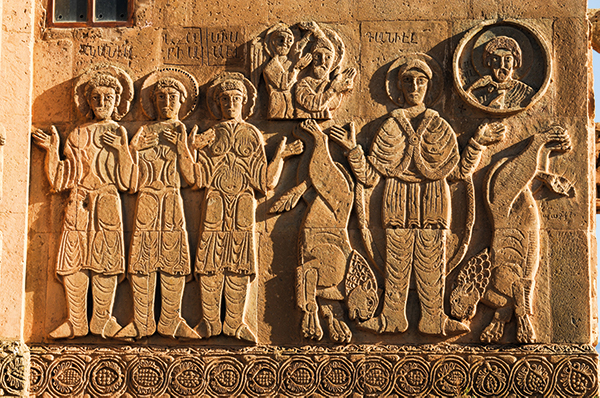
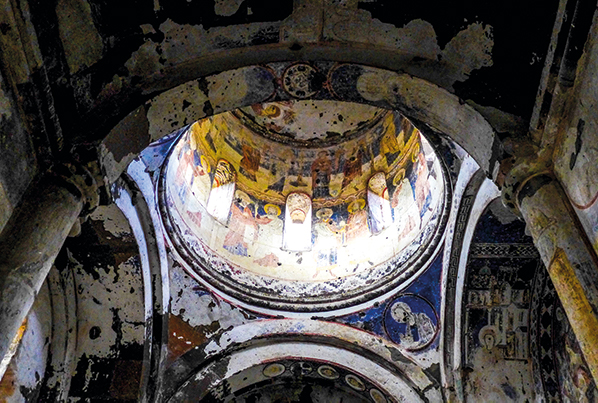
Un testo unico che ripercorre la genesi dell’Armenia come identità etnico-culturale e politica dal IV-V secolo dell’Era Cristiana – con due eventi ‘unici’: la nascita del primo stato confessionale cristiano in assoluto e la creazione dell’alfabeto e della lingua armena – fino ai giorni nostri. Scopriamo così che già nel V secolo, il popolo armeno aveva una sua lingua e una sua religione, elementi importanti che sono sempre stati conservati con orgoglio e determinazione. Questa forte identità del popolo armeno sparso nel Caucaso, nella Turchia orientale fino alla Siria, nel nord dell’Iran, e dal Mar Nero al Mediterraneo, permette di riconoscere i vari territori nei quali sono vissute popolazioni o etnie armene perché questa identità si è sempre riflessa, con poche varianti, sull’architettura religiosa e civile. Su tutto spicca il dramma delle marce della morte che coinvolsero centinaia di migliaia di persone costrette ad abbandonare i loro villaggi, la gran parte morì di fame e numerosi furono uccisi in impiccagioni o altre esecuzioni pubbliche. Moltissimi furono confinati in campi di concentramento. Si reputa che, nel 1919, il numero degli armeni uccisi avesse superato il milione.
- Editore: Mattioli1885
- Volume rilegato, formato cm 30×28. Pagine 184
- ISBN: 978-88-6261-935-6
- Prezzo: Euro 38.00
THE BOOK
A unique text that traces the genesis of Armenia as an ethnic-cultural and political identity from the IV-V century of the Christian Era – with two ‘unique’ events: the birth of the first ever Christian confessional state and the creation of the alphabet and of the Armenian language – up to the present day. Thus, we discover that already in the fifth century the Armenian people had their own language and religion, important elements that have always been preserved with pride and determination. This strong identity of the Armenian people scattered in the Caucasus, in eastern Turkey up to Syria, in the north of Iran, and from the Black Sea to the Mediterranean, allows to recognize the various territories in which Armenian populations or ethnic groups lived because this identity has always reflected, with few variations, on religious and civil architecture. We have also narrated the tragedy of the genocide and the death marches which involved hundreds of thousands of people forced to leave their villages, where most of them died of hunger, and very many were killed in hangings or other public executions. Very many were confined to concentration camps. It is believed that, in 1919, the number of Armenians killed exceeded one million.
- Publisher: Mattioli1885
- Binded, cm 30×28. Pages 184
- ISBN: 978-88-6261-935-6
- Price: Euro 38.00
LE MONTAGNE DELL’ALTOPIANO ARMENO.
ESTRATTO DAL CAPITOLO 3
Gli armeni hanno vissuto per secoli in quello che i geologi chiamano l’altopiano armeno i cui confini sono convenzionalmente rappresentati dal Basso Caucaso, dal Plateau dell’Anatolia (in dettaglio dalla Cappadocia), dalla Mesopotamia e dal Plateau Iraniano. La popolazione armena che ha vissuto in quell’area si è definita sulla base di un alfabeto e di una lingua comuni, e studi recenti avrebbero dimostrato una comunanza genetica forte; fino all’invasione dei Turcomanni e dei Curdi (nell’Alto Medioevo), le popolazioni armene, maggioritarie, avevano convissuto con minoranze assire, ebree, georgiane, greche e persiane.
Tutta la regione, storicamente, è stata caratterizzata da un’elevata attività vulcanica e l’Armenia di oggi, che si trova in gran parte a nord-ovest del monte Ararat, è un paese di aspre montagne e di vulcani estinti. L’Aragats è la montagna più alta dell’Armenia attuale (4090 metri), anch’essa un vulcano estinto.
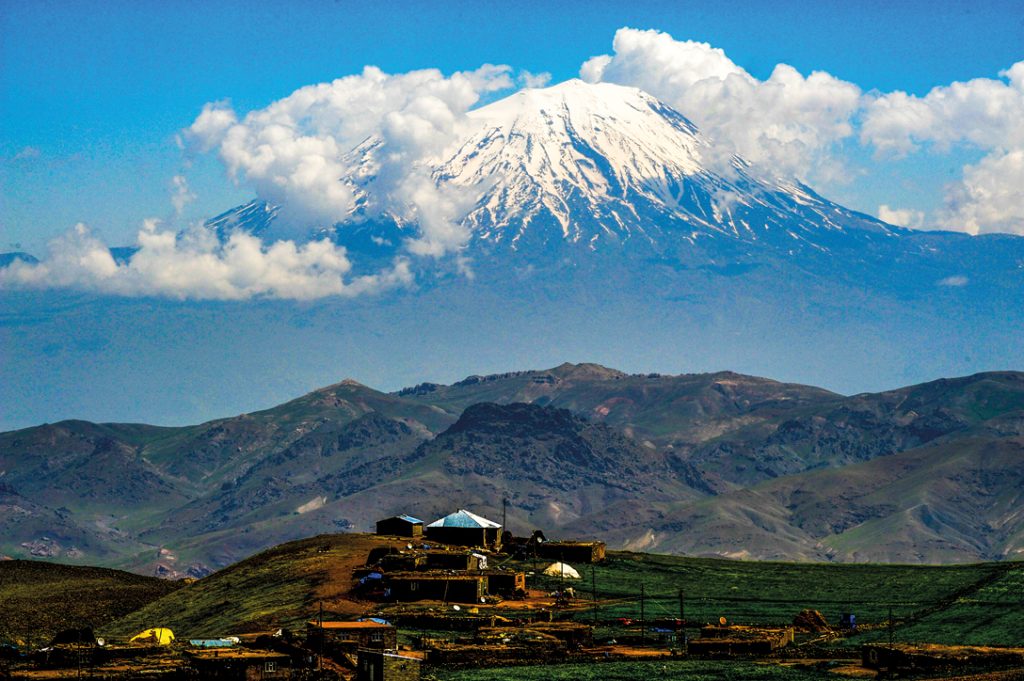
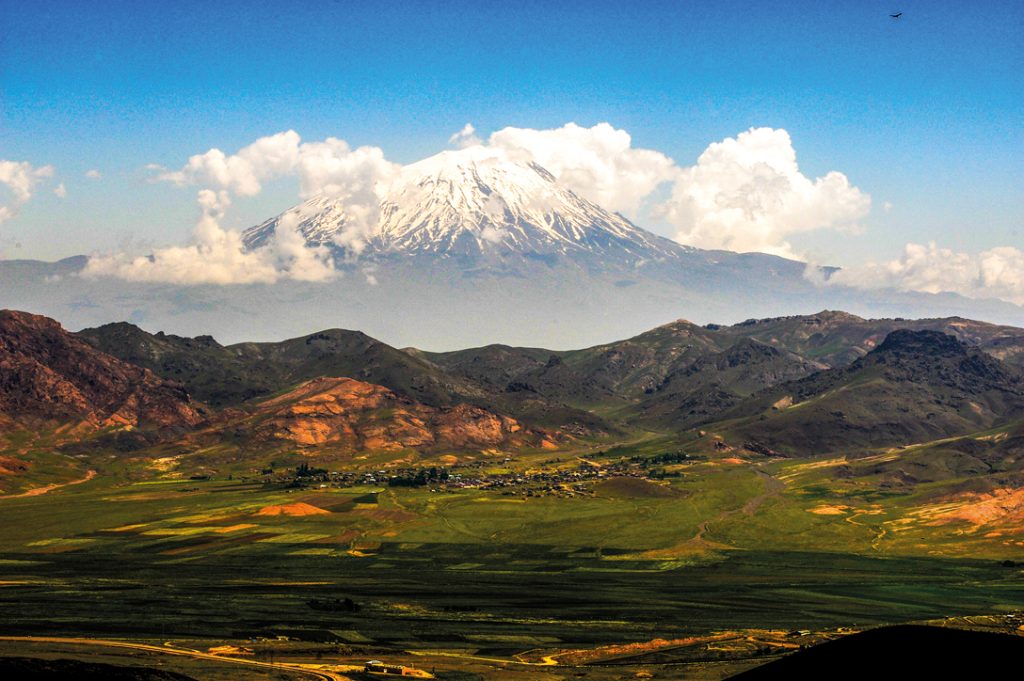
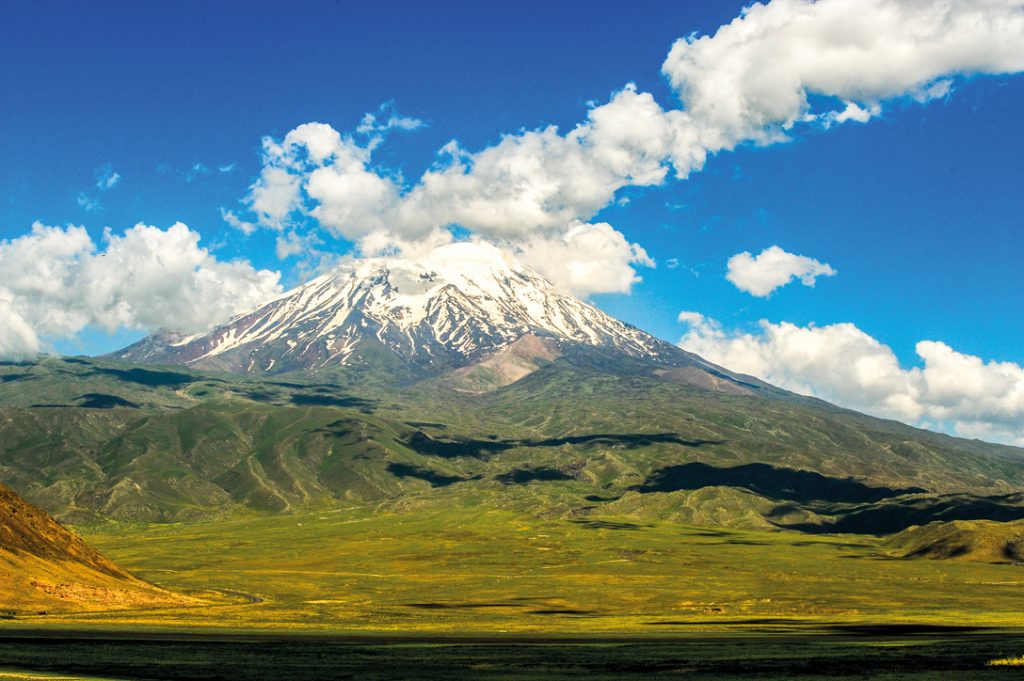
L’Ararat, una montagna fantastica, una leggenda che data da millenni, l’aspro confine fra Asia Minore e Europa, montagna sacra per gli Armeni, raggiunge i 5137 metri di altitudine. In realtà quella montagna era un vulcano, così come era stato un vulcano il Piccolo Ararat (3896 metri) che l’affianca a est. L’ultima eruzione riportata è del 1840, circa cent’anni prima della più recente eruzione del Vesuvio (1944). L’Ararat (Agri in turco, Agiri in curdo) si estende per 30 km alla base, in direzione nord-ovest, il piccolo Ararat di 15 km. In tutto, la catena dell’Ararat misura 45 Km ed è circondata dalla Piana dell’Ararat. Consono con la sua altitudine, l’Ararat possiede un grande ghiacciaio che sta subendo il destino di tutti gli altri ghiacciai: dal 1976 al 2011 la calotta di ghiaccio si è ridotta del 29% con arretramento di circa 70-100 metri quadrati l’anno…
THE MOUNTAINS OF THE ARMENIAN PLATEAU.
EXTRACT FROM CHAPTER 3
Armenians have lived for over a millennium in what geologists call the Armenian Plateau a wide area whose borders are conventionally represented by the Lower Caucasus, the Anatolian Plateau (in detail, Cappadocia), Mesopotamia and the Iranian Plateau. The Armenian population that lived in that area have been currently defined on the basis of a common alphabet and language, but recent studies have shown a strong genetic commonality. Until the invasion of the Turcomans and Kurds (in the early Middle Ages), the Armenian populations either representing a majority or being a minority, had coexisted with Assyrian, Jewish, Georgian, Greek and Persian populations.
Historically, the entire region has been characterized by high volcanic activity and today’s Armenia, which lies largely northwest of Mount Ararat, is a country of rugged mountains and extinct volcanoes. Aragats is the highest mountain in present-day Armenia (4090 meters), also an extinct volcano.
Ararat is a fantastic mountain, a legend dating back thousands of years, the rugged border between Asia Minor and Europe, and a sacred mountain for the Armenians, reaches 5137 meters above sea level. In reality, that mountain was a volcano, just as Little Ararat (3896 meters) that flanks it to the east had been a volcano. The last reported eruption dates back to 1840, about a hundred years before the most recent eruption of Vesuvius (1944). Ararat (Agri in Turkish, Agiri in Kurdish) extends for 30 km at the base, in a north-western direction, the small Ararat 15 km. In all, the Ararat range measures 45 km and is surrounded by the Ararat plain. Consistent with its altitude, Ararat has a large glacier that is suffering the fate of all other glaciers: from 1976 to 2011 the ice cap shrank by 29% with a retreat of about 70-100 square meters per year…
Acquista il volume / Buy the book